Building Authentic Personal Brands: Insights from Mr. Krishna Khanal
Coca-Cola Presents Youth Dialogue is a monthly platform organized by Glocal Pvt. Ltd. to provide young people a meaningful environment to learn, express, and develop. In today’s society, many youths feel they are constantly racing to meet expectations from family, academics, careers, and social circles. This pressure often leads to stress and confusion about personal identity and goals. The Youth Dialogue addresses this concern by focusing not only on success and achievement but also on emotional well-being and clarity of purpose. Participants come from different walks of life with their own stories, struggles, and ambitions. What makes this platform distinct is that it prioritizes honest conversation rather than simple encouragement. It allows youth to learn through real experiences shared by individuals who have faced challenges and growth in their journeys. By combining practical insights with emotional guidance, the program helps participants reflect on their path and inspires them to take proactive steps toward personal and professional growth.
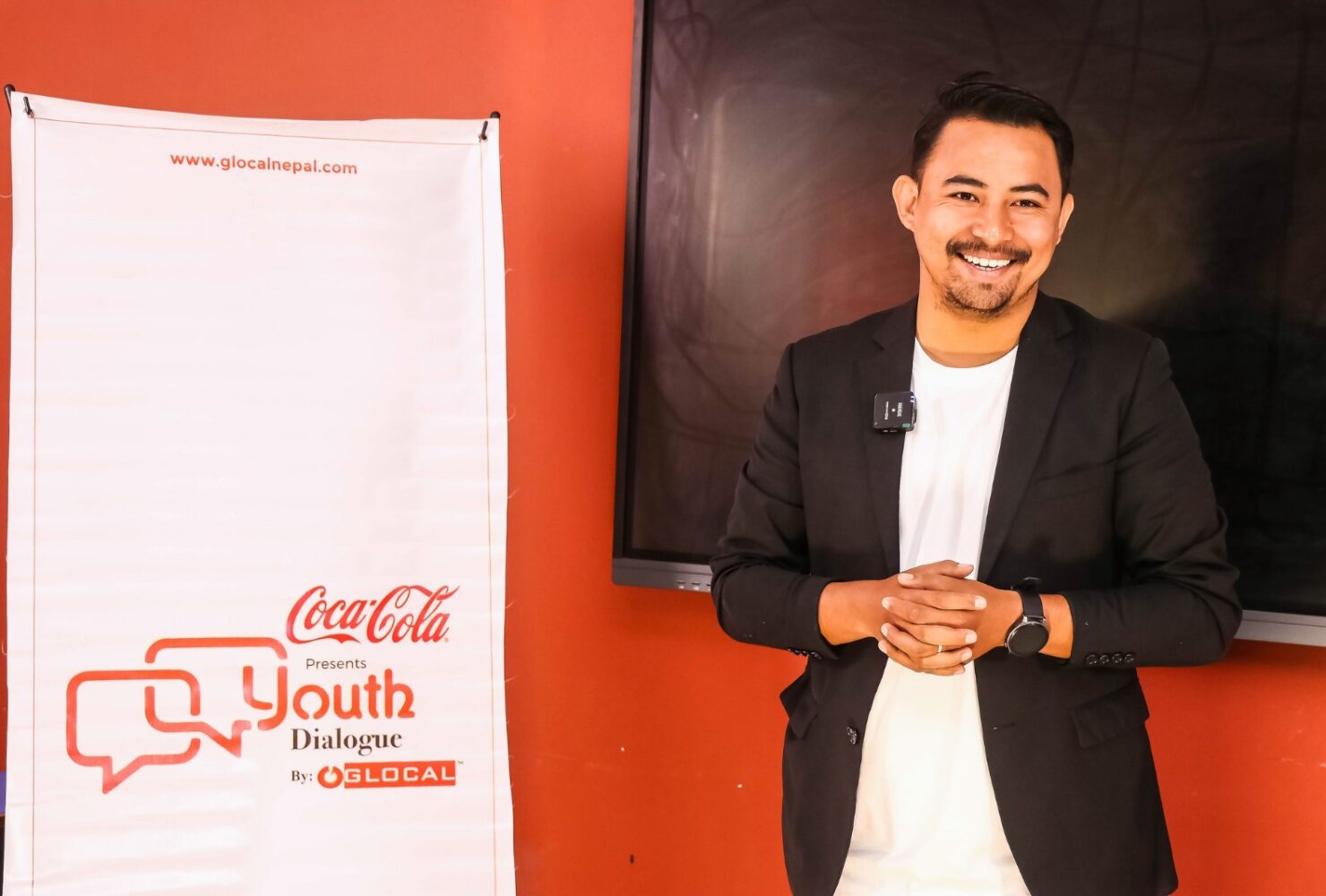
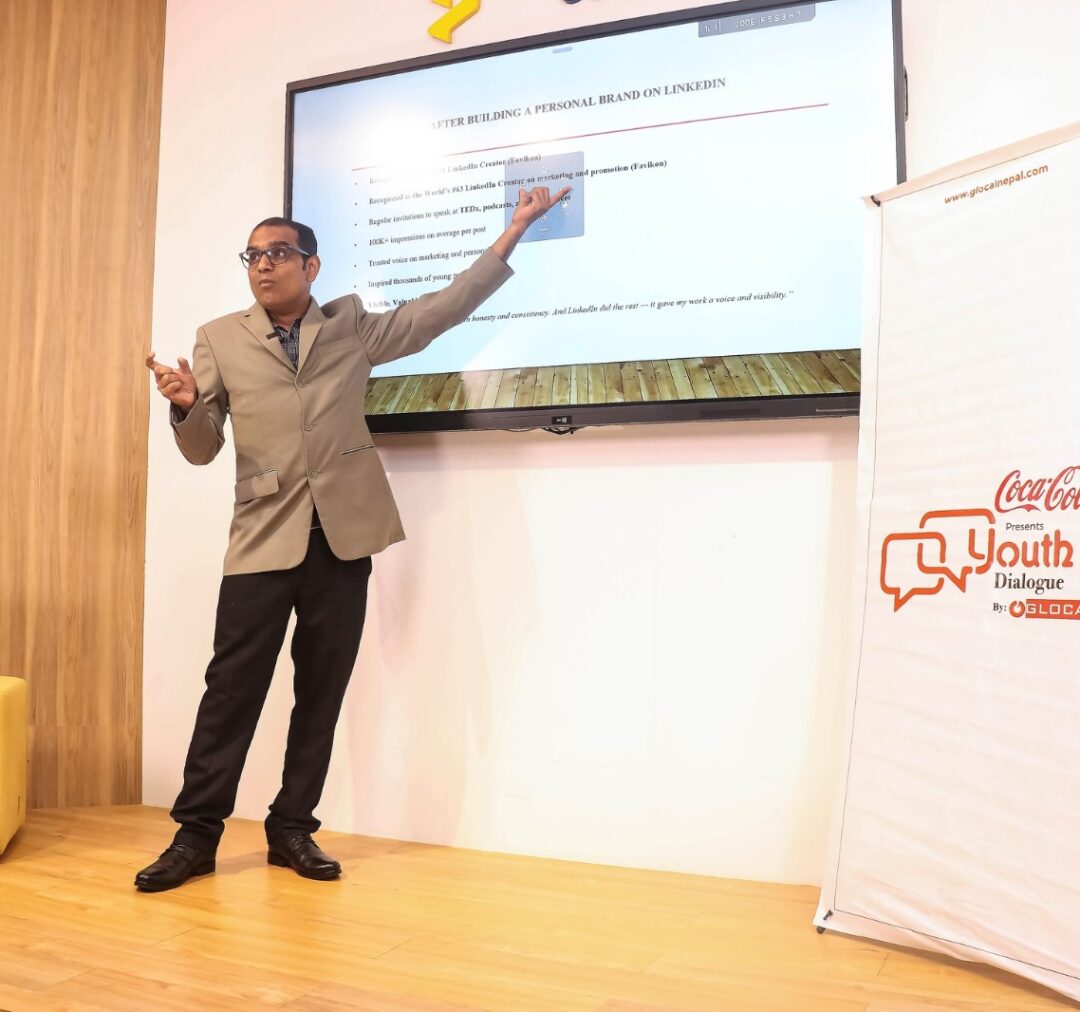
On October 12, the Youth Dialogue was hosted at Embark College, Kathmandu, featuring Mr. Krishna Khanal as the guest speaker. He is an Assistant Professor of Marketing and Ethics at King’s College and has been recognized as Nepal’s No. 1 LinkedIn Content Creator by Favikon. He also has experience working as a Research Analyst at Nanyang Technological University in Singapore. He began his session by reflecting on his early years of teaching. Although he had been teaching for more than a decade, he realized that he had no digital presence. In a time when professional identity often extends to online platforms, being invisible online limited the opportunities available to him. This realization marked a turning point, motivating him to explore ways to establish a personal brand that could extend beyond the classroom and create wider professional visibility.
He shared that platforms like Instagram and TikTok did not align with his strengths because they rely heavily on visuals and performance. However, LinkedIn allowed him to express himself through writing, which he enjoyed and felt confident doing. He started posting consistently, sharing simple but meaningful reflections about teaching, work, and life. Over time, his posts began reaching a wider audience, and people started recognizing him in person, calling him “KK Sir.” Slowly, invitations followed for podcasts, interviews, and even a TEDx talk. What changed was not his profession but his visibility and the way his ideas were perceived. He explained that personal branding is shaped through consistency. When a person appears regularly, people remember them and associate them with a specific value or message, making them more likely to be recognized and trusted.
Mr. Khanal emphasized the importance of the “hook” in writing, meaning the first line of a post that captures attention. According to him, even valuable content may go unnoticed if it does not begin with a strong opening that excites the audience and makes them want to read further. He also mentioned that if individuals do not shape their own personal brand, others will shape it for them. Therefore, it is essential to be intentional about how one presents oneself online. He highlighted that authenticity and vulnerability are crucial, as they foster connection rather than mere attention. By being true to one’s experiences and perspectives, individuals can build a brand that resonates and leaves a lasting impression.
During the Q&A session, students asked how to begin personal branding if they feel they have nothing unique to share. He responded that everyone has experiences and insights worth expressing, and consistency over time reveals one’s uniqueness. When asked how to handle judgment, he stated that judgment is natural, but clarity of purpose should guide one’s actions. He encouraged students to focus on what they can control, the quality, consistency, and authenticity of their content, rather than worrying about external opinions. Another key point he made was the importance of understanding one’s differentiators, the qualities or perspectives that set an individual apart from others, which can then be highlighted consistently to create a memorable personal brand.
The session concluded with the understanding that personal branding is not about fame but about identity, presence, and meaningful recognition. It reinforced that visibility, clarity, and authenticity are far more important than temporary popularity. By consistently sharing one’s knowledge, experiences, and values, young individuals can shape the perception others have of them while remaining true to themselves. The key takeaway is that personal branding is a long-term process that requires patience, deliberate effort, and self-awareness. Students were encouraged to start small, remain consistent, and focus on creating content that reflects their true selves. They were also reminded that being authentic and vulnerable builds trust and connection, which are essential for meaningful professional and personal growth.
In conclusion, Coca-Cola Presents Youth Dialogue not only offers guidance on building personal branding but also highlights the importance of emotional resilience, self-awareness, and purposeful action. The event demonstrated that success is multi-dimensional, combining achievement with well-being and authenticity. Key takeaways for participants include the value of consistency, the power of a strong hook, the importance of authenticity and vulnerability, the need to actively shape one’s brand, and the understanding that judgment is natural but should not deter purposeful action. By integrating these lessons, young people can navigate both the digital and real-world landscapes with confidence, clarity, and impact.